

The House that Starts its Mornings at the Market
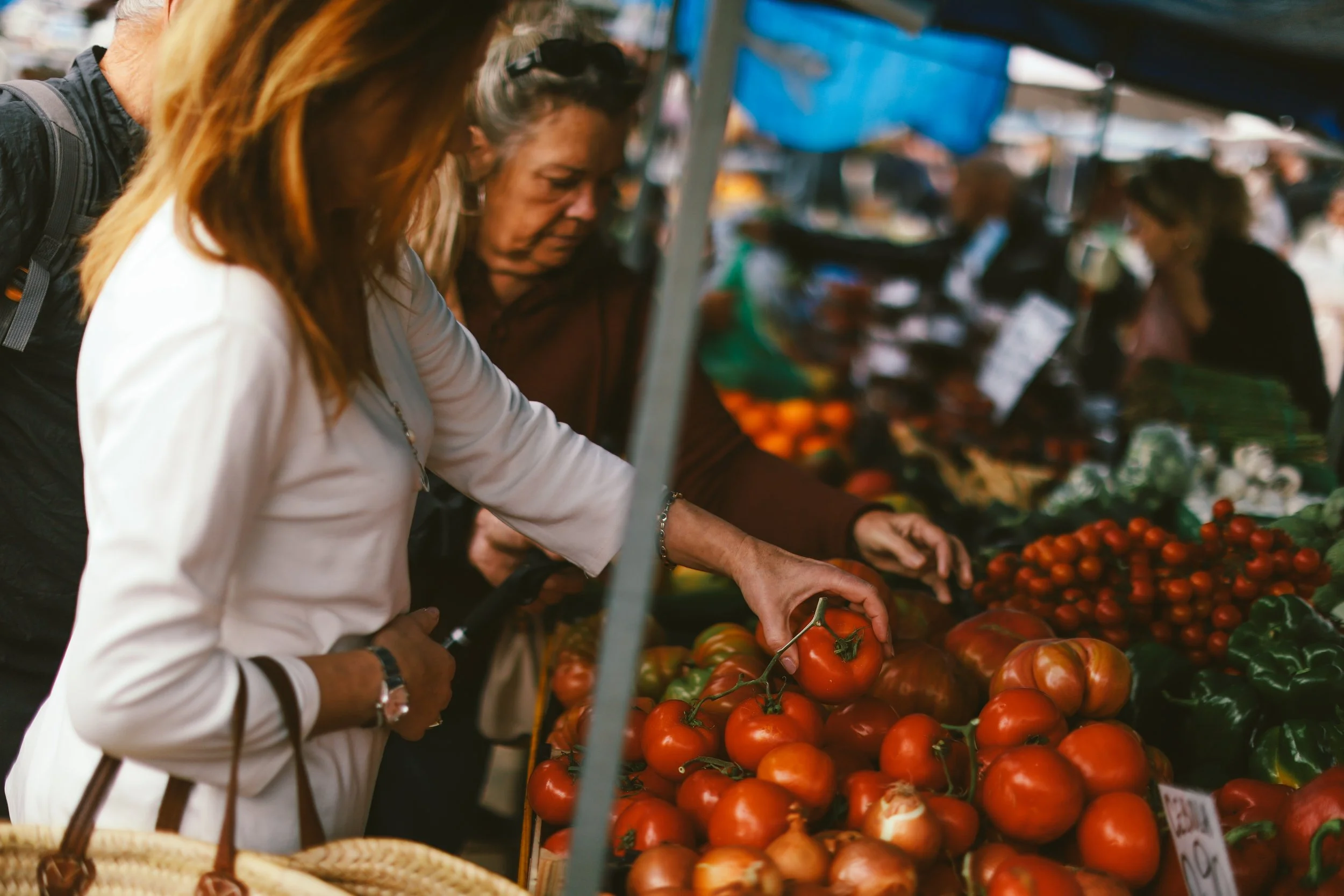
Rain-washed cobbles and the most beautiful fish market in the eastern Algarve.
A birthday-morning walk through the working Portuguese town that most visitors drive straight past.
Most people who fly into Faro turn the wrong way in my view.
The Algarve most visitors know sits to the west of Faro, with the manicured golf resorts of Quinta do Lago and Vale do Lobo, where the coast has been smoothed into something polished and familiar. Turn the other way, though, ten minutes east along the same shoreline, and you arrive somewhere with no interest in being a resort at all. Olhão is a working fishing town in the eastern Algarve, and it would very much like to stay that way. Long may that continue…
This morning in Olhão happens to be my birthday, and it rained overnight, so the town has woken up fresh and clean and warm all at once, the sun already back out. We are heading down to the market, as we do most mornings. But first, we have to actually leave the house.
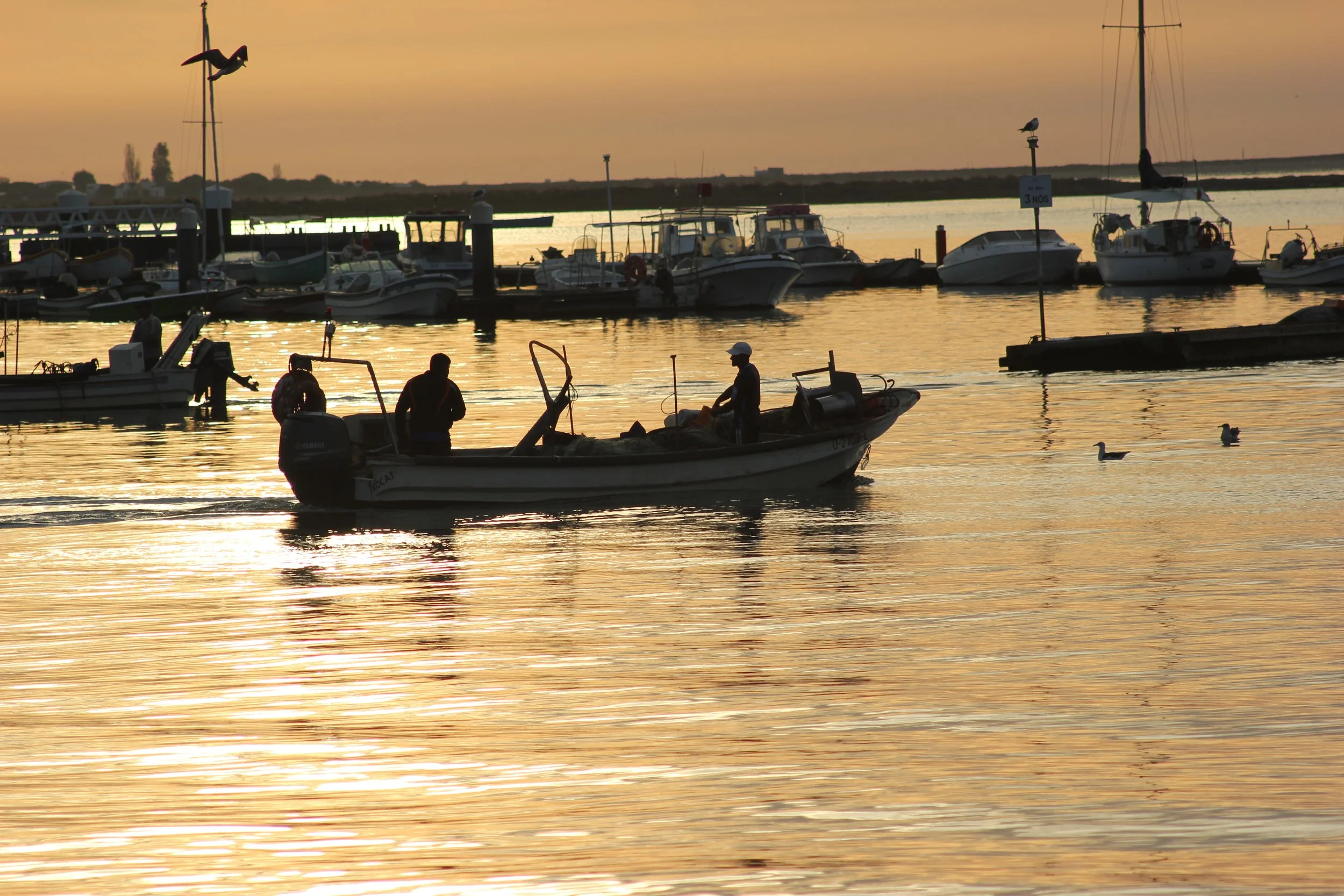
It Takes Two Hours to Leave the House
Part of the problem is that we love Casa Fuzetta too much. The other part is that stepping out into the sunshine after fresh rain is its own reason to linger on the doorstep.
I’m also with our friend Kate, who has generously agreed to become my podcast co-host for “Casa Fuzetta - the House of Stories”. This will be our first day trying out our new portable microphones. The learning curve is significant.. And as ridiculous as it sounds, we are struggling to learn to talk as we walk, wearing little fuzzy microphones that look, endearingly, like pom-poms but honestly, most of the two hours is simply not wanting to hurry.
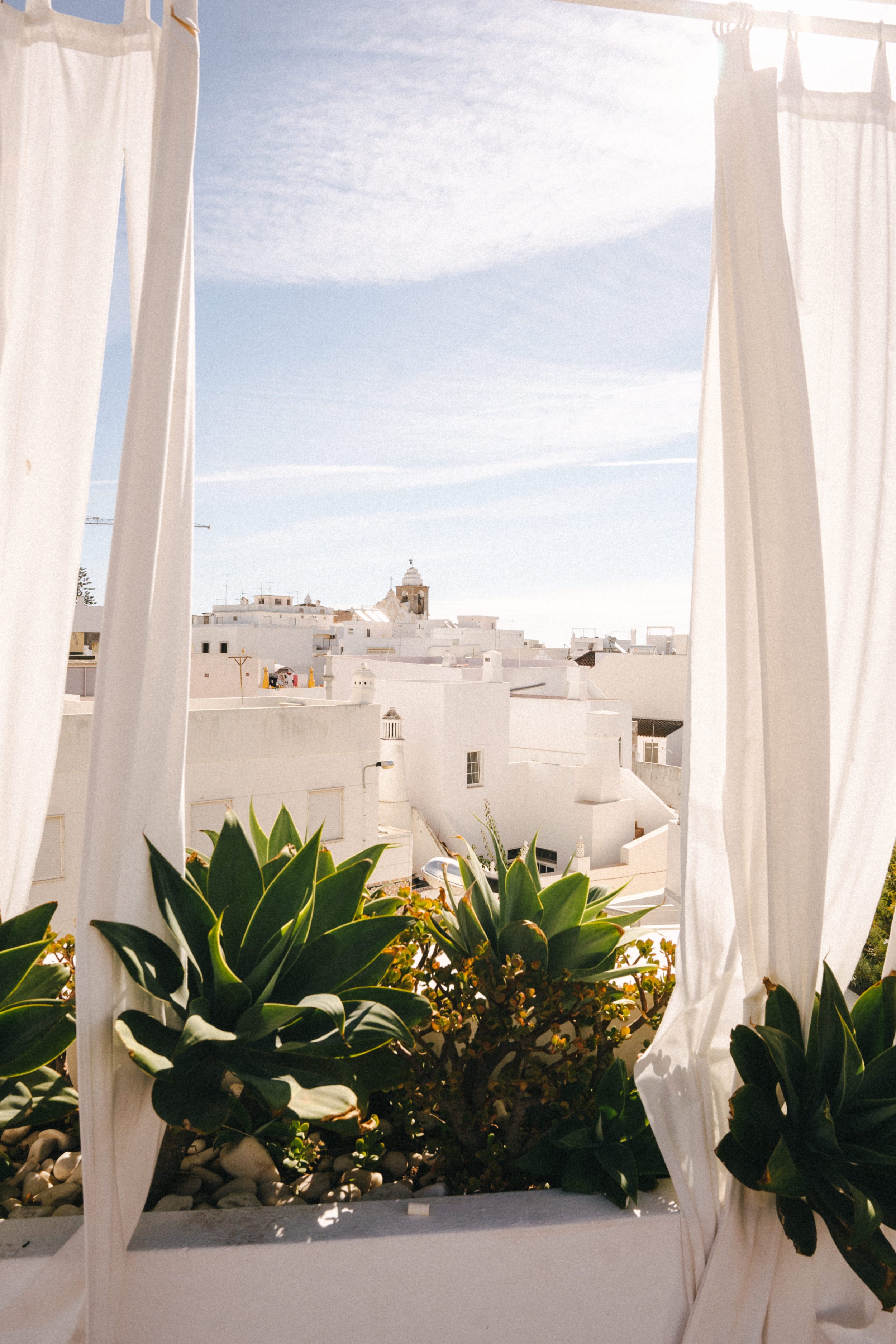
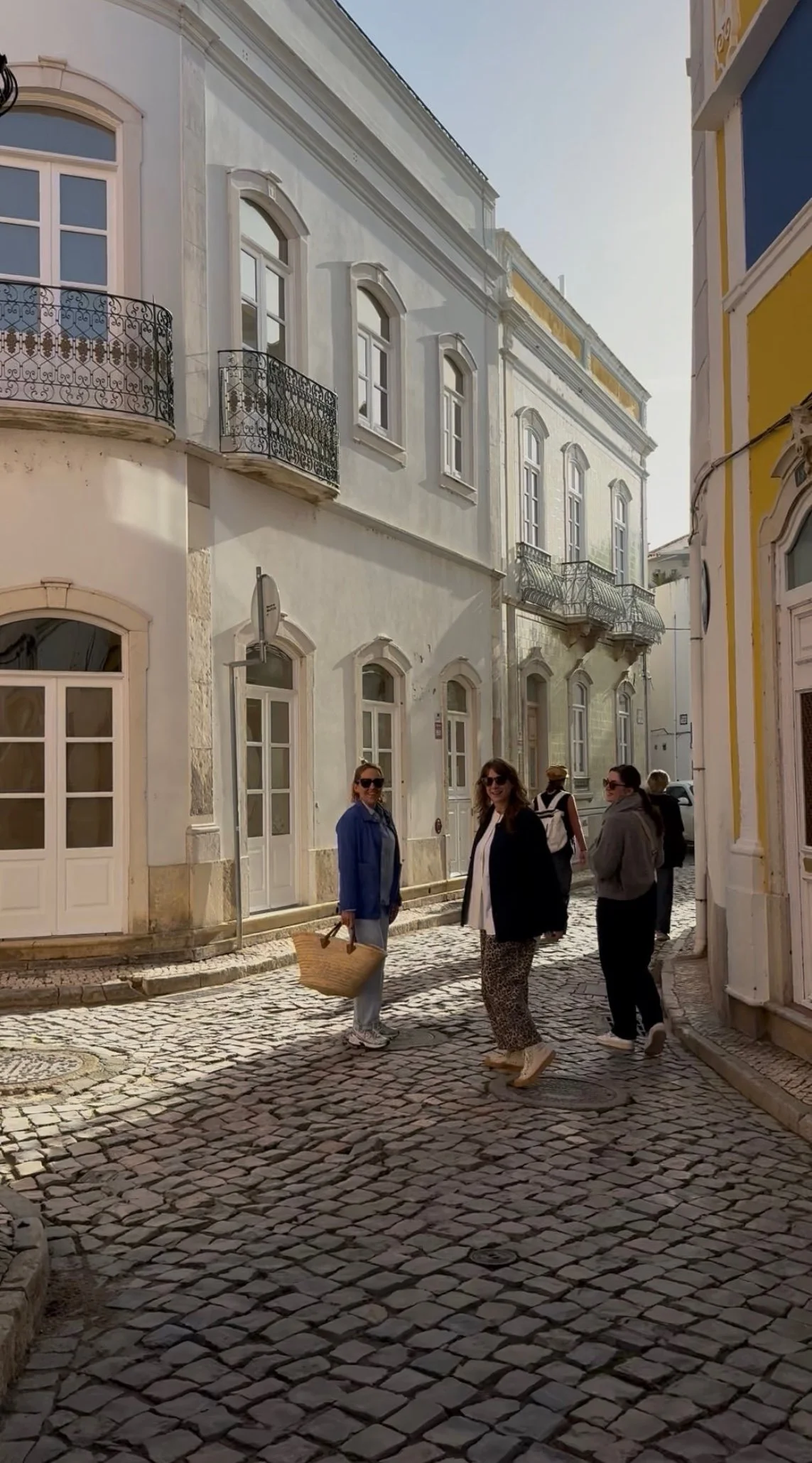
When we finally do get out, the streets of Olhão are wobbly, cobbled and narrow, and this morning the bougainvillaea spilling over the walls is still glistening with overnight rain, catching the light. The tiles are a romp through history: a façade for every taste, every decade, every century, with hand-painted azulejos standing next to bare stone and faded merchant grandeur. Extraordinary buildings sit shoulder to shoulder, and the lanes are so tight that you stop to let a car ease past, advisable unless you aren’t especially fond of your toes.
It took us two hours to leave the house. It often does.
One house we pass is all faded glory and quiet potential, plants growing through its beautiful facade. Small as it faces the street the way so many of these houses are and then, if you are lucky enough to be let inside, you may discover it stretches all the way back to the next road, with an enormous hidden garden behind. Olhão keeps its treasures folded inwards. You have to be shown.
The Neighbour Who Speaks French
Passing the town hall, we fall into conversation with a neighbour, Rita. She doesn't speak much English; she speaks French. So we dust off our rusty schoolgirl French and, between us, piece together her story: twenty-one years in Olhão, a house bought from a friend and lovingly done up, a spell living in Faro that she says doesn't hold a candle to here. Everyone in Faro, she tells us, wants to come to Olhão.
Everyone in Faro wants to come here.
Rita's French is the thread worth pulling, because it holds a piece of history they don't teach us at school. Under the Estado Novo, the dictatorship that ran Portugal from the early 1930s until the Carnation Revolution of 1974, the country was kept poor and tightly controlled, and people left in their droves. Spain, next door, was under Franco, with the usual antipathy that runs between neighbours. Most of those who left went to France. A whole generation quietly drained away.
In the last couple of decades, those older émigrés have been coming home, which is exactly why the elders here greet you in French, while everyone under forty answers in easy English. Rita is one of the returned: she made her life in France, and then came back. It isn't always simple. Return can bring the taxman asking about decades of earnings abroad, something a member of our own house team's family has run into recently, and not gently. But they come back all the same. Olhão pulls.
There is a cost to being loved, of course. Because the town has become so sought-after in the last few years, prices have shot up. On nearly every corner now there is either an estate agent or a renovation underway, though, as Rita points out, there aren't many houses left to sell. You can hear the building works humming in the background the whole time she talks.
The Prettiest Fish Market You'll Ever Smell
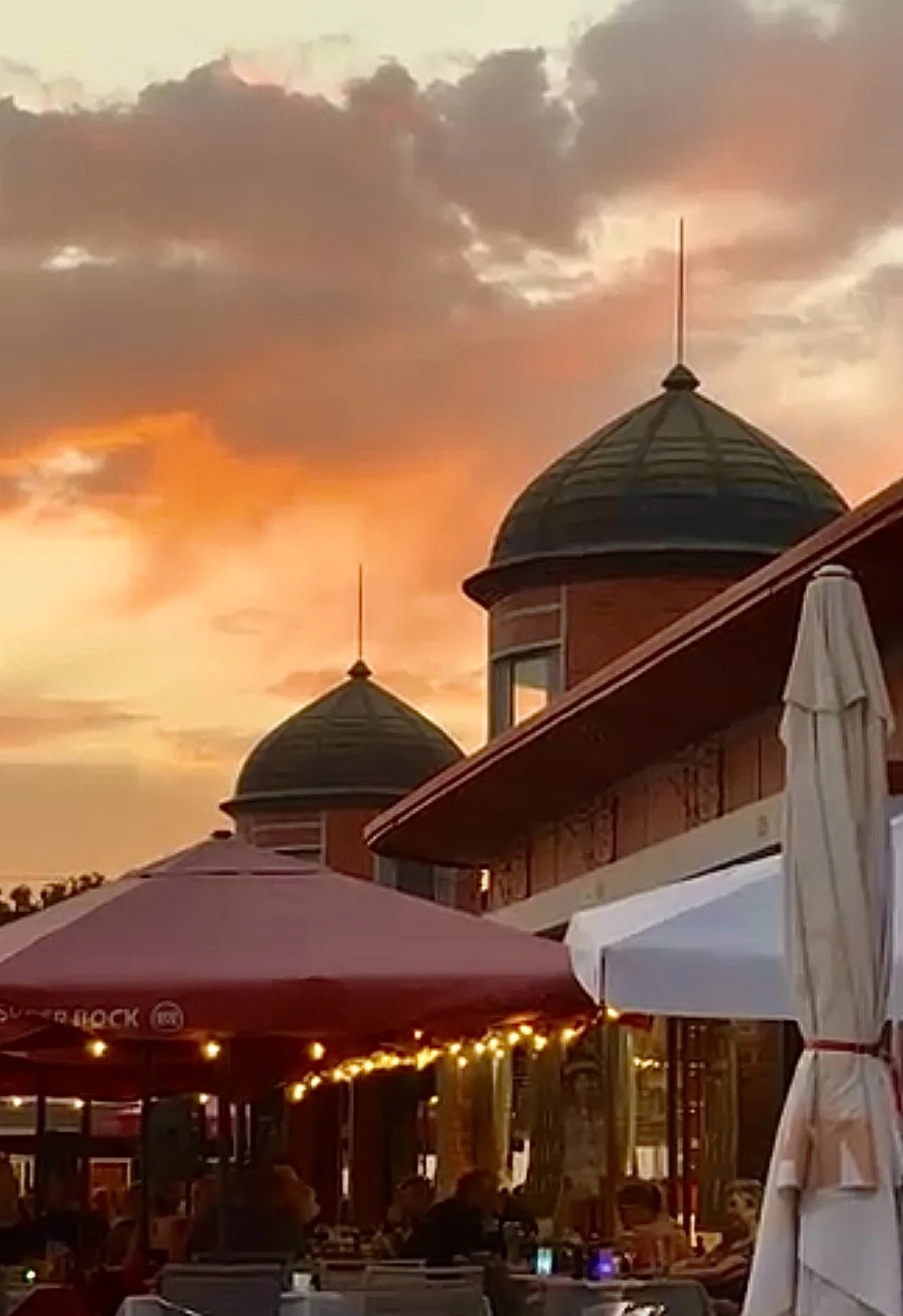
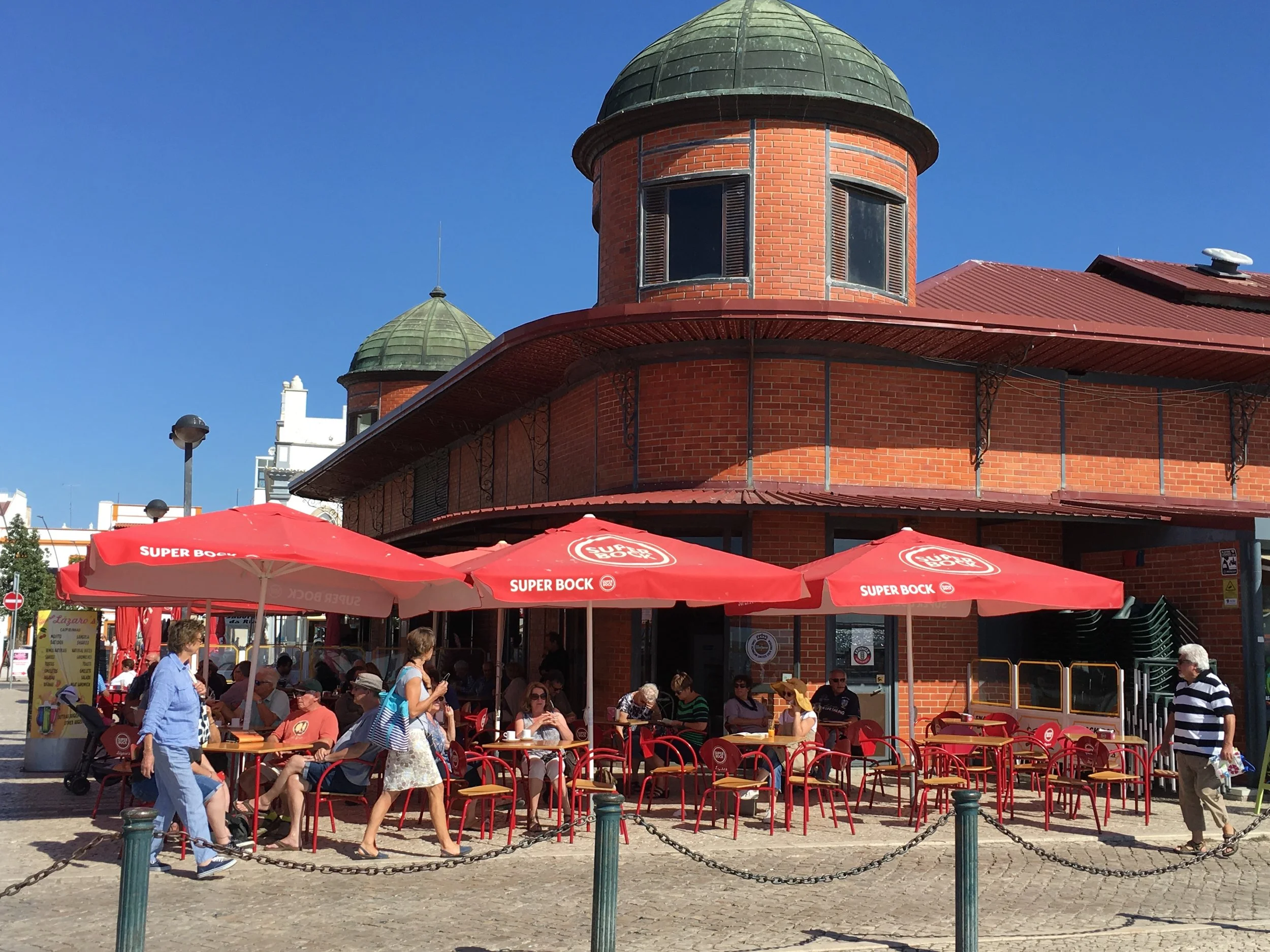
Down at the water's edge, the town opens out into a buzzy run of cafés, sunlight gleaming off the lagoon, and two handsome red-topped market halls standing right on the front. One is fish; the other, fruit and produce. They open every morning but Sunday, and together they are the beating heart of the place.
The building itself is worth the walk. Local legend insists it was built in the style of Gustave Eiffel, an urban myth we rather enjoy, and not entirely impossible, given his name is famously attached to the great lift in Lisbon. Believe what you like. The smell will convince you either way, and sadly that is the one thing we cannot put in a blog. You'll have to come and savour it yourself.
Inside, banks of fishmongers line each side, with a central island and the walls tiled two-thirds of the way up decorated with starfish and the local seahorses. And then the fish: mounds of shrimp, mackerel, cuttlefish, squid, slim silver things you couldn't name if you tried. The prize is the carabineiro, a scarlet prawn that leaps out at you from the ice, thirty euros a kilo against sixteen for the regular camarão, very nearly double, and worth it for the colour alone.
What we love most is the honesty. Every card tells you where the fish was caught, how it was caught, and whether it was farmed. The red carabineiro: taken at sea, off the Portuguese coast, in the north-east Atlantic, not farmed. Look a little closer, and you'll spot the trays that came from a farm off the Spanish coast instead. Nothing is hidden; you choose knowing exactly how it reached your plate. For all the times Portuguese bureaucracy may make me cry, this is the flip side of the very same instinct, and it is the kind of transparency the rest of the world is still reaching for.
Every card tells you where the fish was caught, how, and whether it swam there or was farmed. Nothing hidden.
And then there is the litão. Air-dried, a speciality for Christmas, and so rare that they say Olhão is the only place left that still makes it, which probably means the only place in the world. Rarer still, only one family is left holding the knowledge of how to dry it: catch the right fish anywhere along this coast, and you bring it to their door. We'll confess we haven't been converted, much as we've never quite come round to bacalhau, the salted cod that runs like a thread through Portuguese life. But that is exactly the joy of a place like this. There is always one more thing to try.
Across the Aisle: Honey, Chimney Pots and a Health Warning
Step into the second hall and everything shifts. The energy is calmer, the smell suddenly sweeter. Where the fish side is all salt and ice and the theatre of cleaning and chopping, this side is fruit and produce and quiet. Even the pictures on the walls change: birds and trees and harvest instead of seahorses and shells.
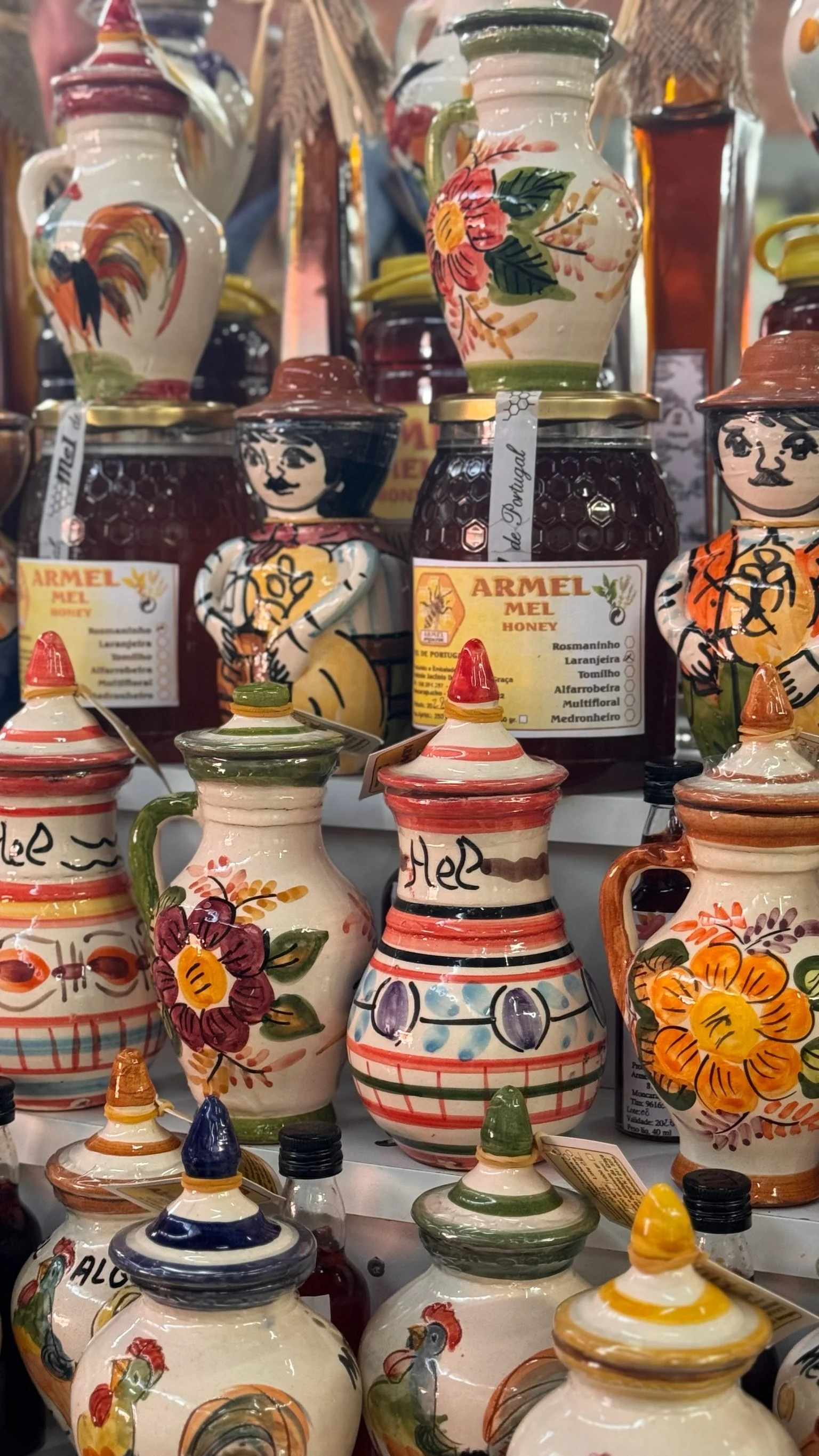
Here are the displays that stop you where you stand: honey and nuts and dried fruit, homemade jams, and, be warned, a piri-piri sauce that arrives with a genuine health warning and chilli flakes you can count through the glass. There are liqueurs in every flavour Portugal can dream up: medronho and cherry, carob and fig, almond, acorn, chestnut, orange, strawberry. A whole education in a single row of bottles.
Our own particular weakness is the honey jars: hand-painted ceramic, shaped like the ornate chimney pots the Algarve is famous for and we should know, having had to rebuild ours more than once. In November they arrive dressed for Christmas, a little parade of ladies in sun hats, a pair of gentlemen, a star. We photograph every one, and we always take home more than we meant to.
This is not a tourist attraction. It's a Wednesday.
Come on a Saturday morning, and the waterfront comes fully alive: smallholders drive in from twenty miles around with whatever came out of the ground the day before, and the whole town stocks up for the week ahead. A riot of colour and smell and gossip. These are family affairs: husbands, wives, children, grandchildren, some out on the boats and some behind the stalls and half the pleasure of the place is in the greetings rather than the goods. People genuinely glad to see one another. It makes doing the weekly shop feel like something you'd choose to do for fun.
Where the Morning Ends: Coffee on the Water
We finish where we always finish: a small table right on the front, the sun scattering across the water like handfuls of jewels, a coffee in hand. Portugal takes its coffee seriously; seriously enough that the varieties are a whole subject of their own, and very possibly a whole other episode. For now, we just sit with our galao and enjoy the moment.
Because this is the thing about Olhão. The market is not local life dressed up for visitors; it is simply local life, and visitors happen to be lucky enough to be let in. Come in August, and you'll share it with the summer crowds. Come in late November on a birthday, after overnight rain, when the bougainvillaea is glistening, and the honey jars are wearing their Christmas best, and you'll find it doing exactly what it has always done, for the people it has always done it for.
You don't come to Olhão's market as a visitor. You're let into it as a neighbour.
This is the town Casa Fuzetta calls home, five minutes from our door. The house may be where the stories get told, but the town, in the end, is half the reason people keep coming back.
To follow our path, check out our insta reel here

If you would like to deep dive into the Casa Fuzetta - House of Stories podcast. We invite you to explore the current two series via the links below.